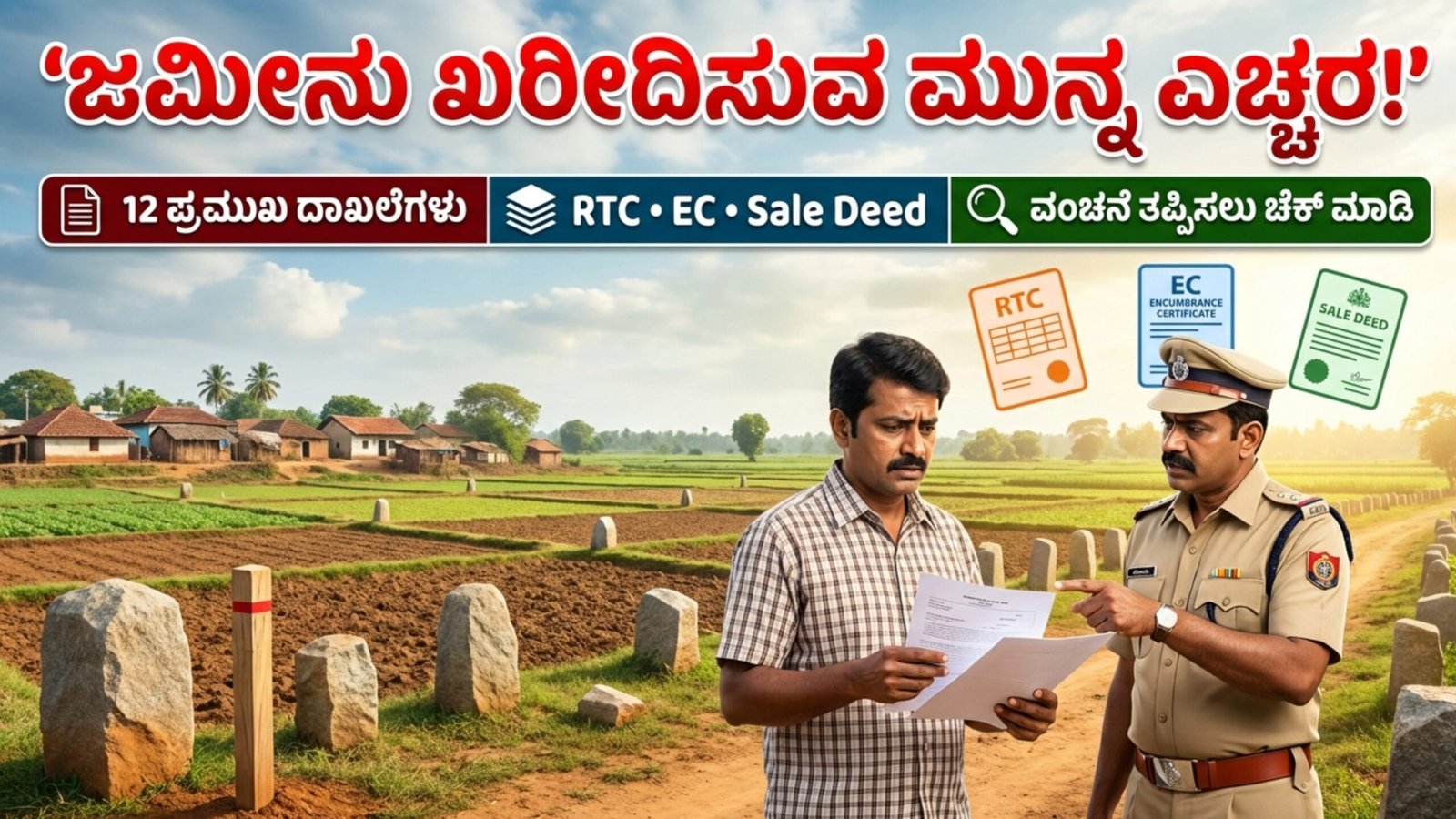
Buying land or property is one of the biggest financial decisions in a person’s life. For many families, purchasing land is the result of years of hard work and savings. Whether it is for building a house, farming, or investment, owning land provides financial security and stability. However, in recent years, cases of land fraud, illegal sales, and ownership disputes have increased, especially in rapidly developing areas.
Many buyers rush into purchasing property without verifying the necessary legal documents. This mistake can lead to serious problems such as court cases, ownership disputes, or even losing the entire investment. Therefore, it is extremely important to verify all relevant documents carefully before registering the property.
Experts recommend that buyers must check at least 12 important documents before purchasing land to ensure that the property is legally safe and free from disputes.
1. RTC or Pahani (Record of Rights)
The RTC (Record of Rights, Tenancy, and Crops), commonly known as Pahani, is one of the most important land records in Karnataka. It contains complete details about the land, including:
- Name of the landowner
- Survey number of the land
- Total land area
- Type of land (agricultural or other)
- Crops grown on the land
Checking the RTC helps confirm whether the person selling the land is the actual legal owner. Buyers should also verify older RTC records to understand the ownership history.
2. Mutation Register Extract
The Mutation Register shows the history of ownership changes. Whenever land ownership changes due to sale, inheritance, gift, or transfer, it must be recorded in the mutation register.
By checking this record, buyers can understand how the current owner obtained the property. If the mutation process is incomplete or incorrect, the buyer may face legal complications later.
3. Akarband or Atlas
The Akarband (Atlas) is a land record map prepared by the revenue department. It clearly shows the exact boundaries and shape of the property.
This document helps buyers confirm:
- Land boundaries
- Actual land measurement
- Whether the land area matches official records
Without checking the Akarband map, buyers may unknowingly purchase land with boundary disputes or incorrect measurements.
4. Encumbrance Certificate (EC)
The Encumbrance Certificate is an essential document that shows whether the property has any financial or legal liabilities.
It provides information about:
- Loans taken using the property
- Mortgages
- Legal disputes
- Previous property transactions
Experts recommend checking EC for at least the last 15–30 years. If the property has any pending loan or legal claim, it will appear in this document.
5. Original Sale Deed
The Original Sale Deed is the primary proof of ownership. It contains details about the transfer of property from the previous owner to the current owner.
Buyers should carefully verify:
- The authenticity of the sale deed
- Previous ownership records
- Link documents that show the chain of ownership
A clear ownership history ensures that the property has been legally transferred without disputes.
6. Village Map
A Village Map helps buyers understand the location and surroundings of the property. It includes important details such as:
- Survey numbers of nearby lands
- Roads and access paths
- Government land
- Water canals or drainage systems
Checking the village map ensures that the land is not located on government land, road access areas, or drainage zones.
7. Land Tax Paid Receipts
Every landowner must pay land tax to the government. Before purchasing property, buyers should verify that the seller has paid all taxes without any pending dues.
Tax receipts help confirm:
- The property has no tax arrears
- The land is officially recognized by the government
- The buyer will not inherit unpaid tax liabilities
8. Land Conversion Certificate
Agricultural land cannot always be used for residential or commercial purposes. If a buyer plans to construct a house, apartment, or commercial building, the land must be officially converted from agricultural to non-agricultural (NA) use.
A Conversion Certificate issued by the government confirms that the land can legally be used for construction or development.
9. 11E Sketch or Survey Sketch
If you are purchasing only a portion of a larger land property, a 11E Sketch becomes very important.
This document provides:
- Exact measurement of the purchased portion
- Clear boundary details
- Official survey division of the land
Without this sketch, buyers may face boundary disputes with neighbors in the future.
10. Family Tree or Legal Heir Certificate
If the original owner of the property has passed away, the land may belong to multiple legal heirs. In such cases, it is important to check the family tree or legal heir certificate.
Buyers must ensure that all legal heirs have agreed to the sale. If even one heir objects later, the buyer may face legal disputes or court cases.
11. Khata Certificate and Khata Extract
The Khata Certificate confirms that the property is registered in the owner’s name in municipal or local government records.
This document is necessary for:
- Paying property taxes
- Obtaining building approvals
- Transferring property ownership to the buyer
A valid Khata ensures that the property is legally recognized by the local authority.
12. Land Acquisition Status
Before buying land, it is crucial to check whether the property is under government acquisition for development projects.
Sometimes land may be acquired for projects such as:
- Industrial development (KIADB)
- Urban development (BDA)
- National highways or infrastructure projects
Buyers can confirm this information from relevant government offices to ensure the land is not reserved for future public projects.
Important Safety Tips Before Buying Land
Consult a Property Lawyer
One of the safest steps before buying land is to consult an experienced property lawyer. A legal expert can verify documents, identify risks, and provide a professional legal opinion.
Conduct a Physical Inspection
Do not rely only on documents. Visit the property site personally and check:
- Actual land boundaries
- Road access
- Nearby developments
- Any disputes with neighbors
In some cases, buyers may also hire a government surveyor to measure the land accurately.
Verify Documents from Official Sources
Always collect documents from official government platforms such as:
- Tahsildar office
- Sub-Registrar office
- Bhoomi portal
- Kaveri 2.0 portal
Avoid relying entirely on brokers or agents for documentation.
Buying land is a major lifetime investment, and even a small mistake can lead to significant financial loss. Always verify every document carefully before making any payment or signing an agreement.
Experts also recommend speaking with neighboring landowners or farmers near the property. Local residents often know important details about the land that may not appear in official records.
Remember this simple rule:
In property transactions, documents are stronger than promises.
Taking time to verify the required documents will help you protect your investment and avoid future legal problems.