The Prime Minister’s Employment Generation Programme (PMEGP) is a flagship credit-linked subsidy scheme launched by the Government of India to promote self-employment and entrepreneurship. It is implemented by the Khadi and Village Industries Commission (KVIC) at the national level, in coordination with state KVIC offices, District Industries Centres (DICs), and banks.
The main objective of PMEGP is to generate sustainable employment opportunities in both rural and urban areas by helping individuals and groups establish new micro-enterprises. Under this scheme, financial assistance is provided in the form of bank loans combined with a government subsidy, making it easier for people to start businesses with lower financial burden.
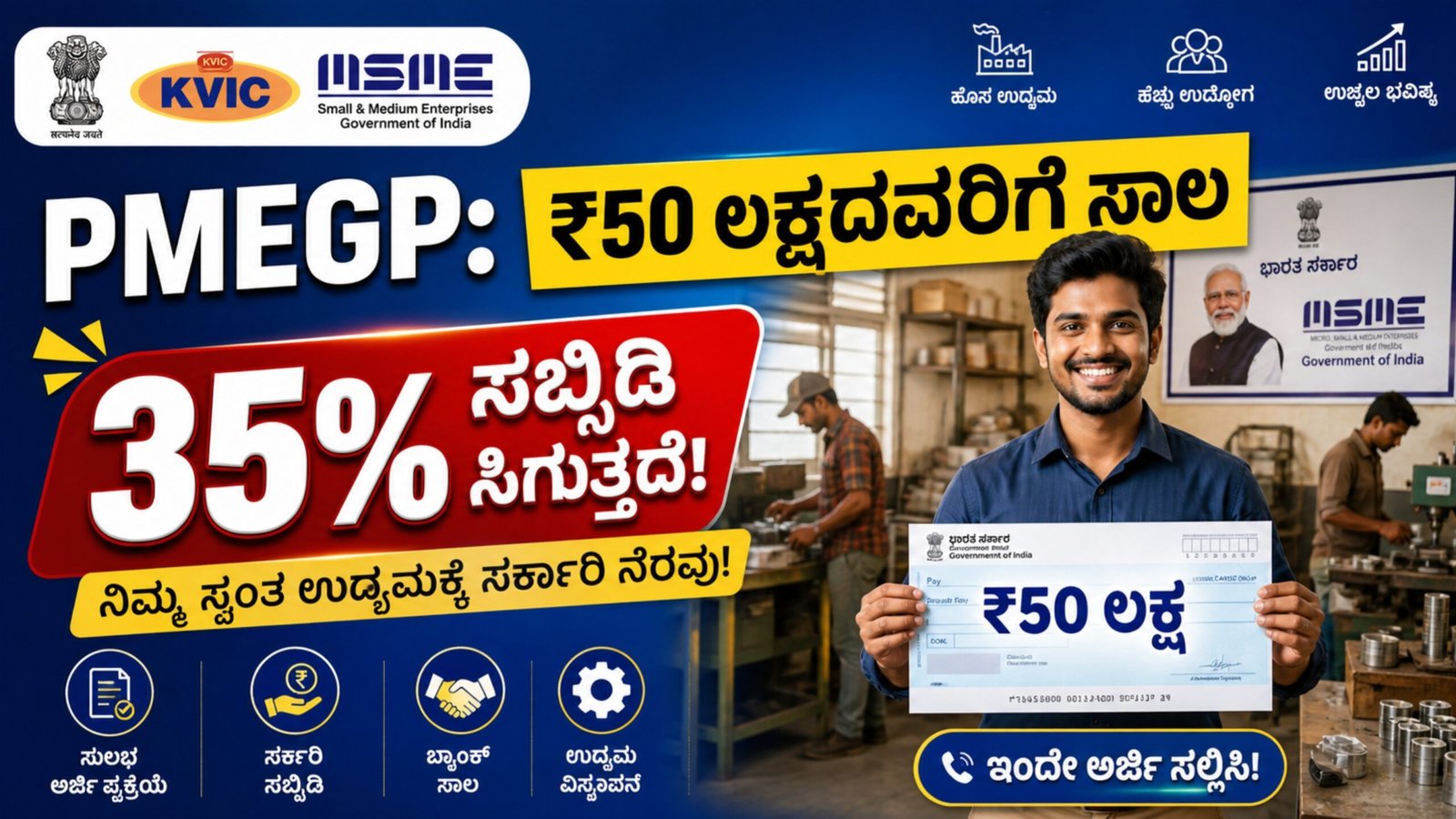
One of the key features of PMEGP is the maximum project cost limit. For manufacturing units, entrepreneurs can avail loans up to ₹50 lakh, while for service-based businesses, the limit is ₹20 lakh. The scheme is strictly meant for new ventures, meaning existing businesses are not eligible for benefits.
The subsidy component is a major attraction of the scheme. Depending on the applicant’s category and location, the subsidy ranges from 15% to 35% of the total project cost. For general category applicants in urban areas, the subsidy is around 15%, while it increases to 25% in rural areas. For special categories—such as SC, ST, OBC, women, minorities, ex-servicemen, and people from North Eastern Regions—the subsidy is higher, reaching up to 35% in rural areas and 25% in urban areas. This subsidy is directly linked to the loan and is adjusted against the repayment amount.
Applicants are also required to make a beneficiary contribution toward the project cost. This is typically 10% for general category applicants and 5% for special category applicants, making the scheme more accessible to economically weaker sections.
The repayment period for PMEGP loans usually ranges from 3 to 7 years, depending on the nature and scale of the business. Banks may also provide a moratorium period before repayment begins, allowing the business to stabilize.
In terms of eligibility, individuals aged 18 years and above can apply. Other eligible entities include Self-Help Groups (SHGs), cooperative societies, and charitable trusts. For projects above ₹10 lakh in manufacturing or ₹5 lakh in services, the applicant must have at least an VIII standard (8th class) education.
The application process is fully online through the PMEGP E-Portal. Applicants need to register under the “New Unit” category and submit required documents such as Aadhaar card, PAN card, project report, and educational certificates. After submission, the application is reviewed by authorities and then forwarded to banks for loan sanction.
Overall, PMEGP plays a crucial role in boosting small-scale industries, reducing unemployment, and encouraging entrepreneurship across India. By combining financial support with subsidies, it lowers entry barriers for aspiring business owners and contributes significantly to economic development.