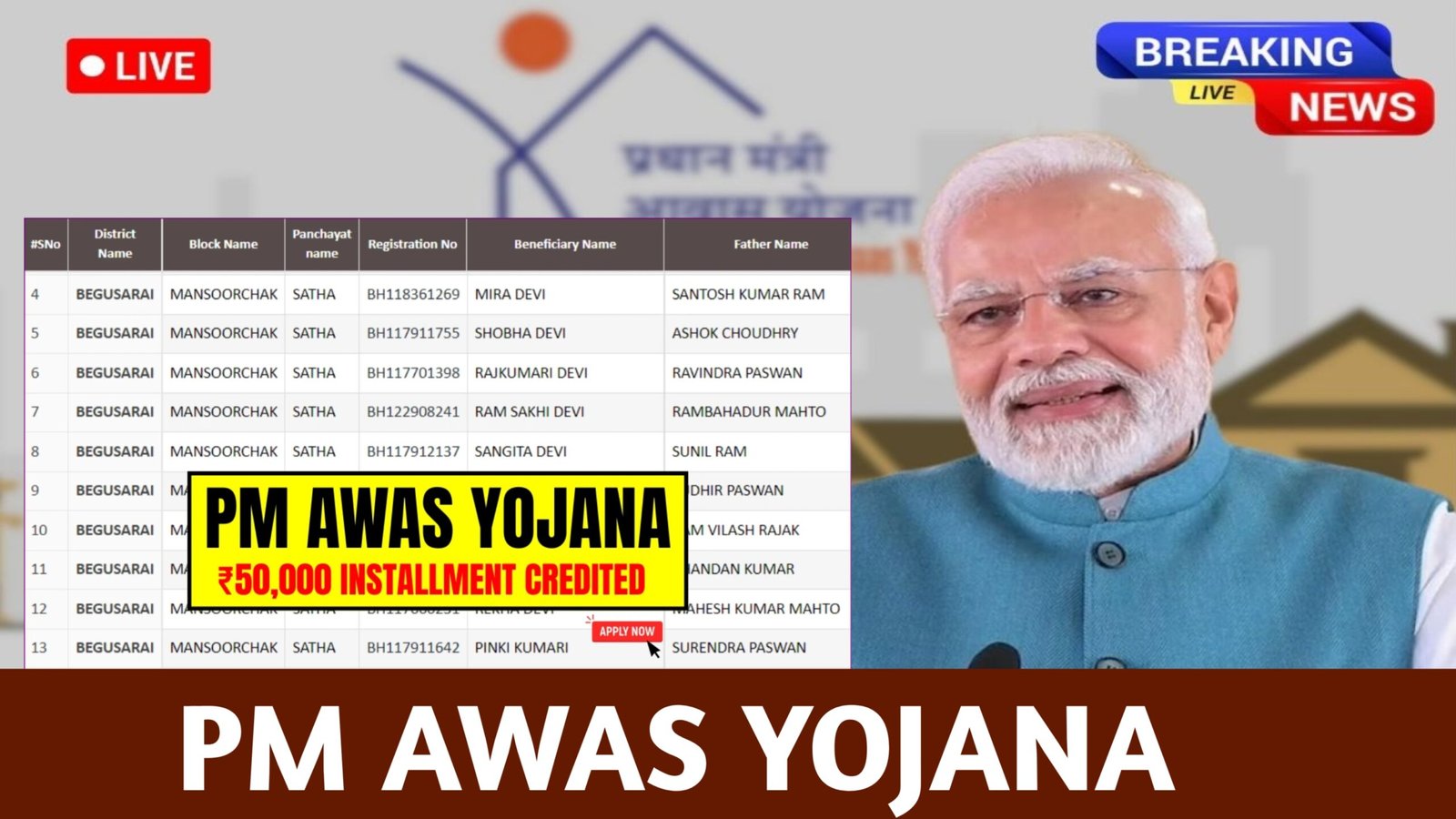
The Pradhan Mantri Awas Yojana (PMAY) has been one of India’s most ambitious housing projects, aiming to fulfill the dream of “Housing for All.” If you have applied for a free or subsidized home under PMAY, there’s good news — the latest beneficiary list has been released by the government. Beneficiaries can now check their names online to confirm whether they have been allotted a house under the scheme.
This article explains everything you need to know about the PM Awas Yojana beneficiary list, including eligibility criteria, how to check your name, benefits, required documents, and how to apply if you haven’t done so yet.
What is the Pradhan Mantri Awas Yojana (PMAY)?
Launched in June 2015 by the Government of India, the Pradhan Mantri Awas Yojana (PMAY) is a flagship scheme that provides affordable housing to the urban and rural poor.
The primary objective of the scheme is to ensure that every Indian family has access to a pucca (permanent) house with basic facilities such as water supply, electricity, and sanitation by the year 2025.
The scheme is divided into two major parts:
- PMAY-Urban (PMAY-U): For people living in towns and cities.
- PMAY-Gramin (PMAY-G): For people living in rural and village areas.
Latest Update – Beneficiary List Released
The Ministry of Housing and Urban Affairs has recently released the updated list of beneficiaries under both PMAY-Urban and PMAY-Gramin.
Applicants who have registered for free or subsidized homes can now check their names online using their Aadhaar number or application reference number.
The government has also started releasing second and third phase lists in several states. Beneficiaries whose names appear in the list will soon receive confirmation messages and allocation details through SMS or local gram panchayat offices.
Benefits of PM Awas Yojana
The PMAY scheme offers a range of financial and housing benefits to eligible families. Here’s what beneficiaries can expect:
- Free or Subsidized House:
Eligible rural families below the poverty line may receive a completely free house under PMAY-Gramin. - Interest Subsidy on Home Loans:
Under the Credit Linked Subsidy Scheme (CLSS), beneficiaries get interest subsidies on home loans — ranging from 3% to 6.5%, depending on their income category. - Financial Assistance:
- ₹1.20 lakh to ₹2.67 lakh subsidy for urban homes.
- ₹1.20 lakh for plain areas and ₹1.30 lakh for hilly regions under PMAY-Gramin.
- Basic Amenities Included:
Each PMAY house includes essential amenities such as:- Electricity connection
- Tap water supply
- Toilet facility
- LPG connection (through Ujjwala Yojana)
- Empowerment of Women:
Ownership of the house is given in the name of the female head of the family, ensuring financial and social security for women. - Employment Generation:
Construction of houses under PMAY has also generated millions of jobs for local workers, masons, and suppliers.
Who is Eligible for PMAY?
To ensure that the benefits reach the right people, the government has laid down specific eligibility criteria.
For PMAY-Gramin (Rural):
- The applicant must not already own a pucca house anywhere in India.
- The family should be listed in the Socio-Economic Caste Census (SECC) 2011 data.
- Priority is given to families belonging to SC/ST, BPL, and Minority categories.
- Widow or single women-headed households are also eligible.
- The family’s annual income should be below ₹3 lakh.
For PMAY-Urban:
- The applicant’s annual household income should fall under one of the following categories:
- EWS (Economically Weaker Section): Up to ₹3 lakh
- LIG (Low Income Group): ₹3 lakh to ₹6 lakh
- MIG-I: ₹6 lakh to ₹12 lakh
- MIG-II: ₹12 lakh to ₹18 lakh
- The applicant should not have availed any other government housing scheme.
- The applicant must not own a house in their or family member’s name.
How to Check Your Name in the PM Awas Yojana List
You can easily check whether your name appears in the PMAY beneficiary list by following these steps:
For PMAY-Gramin (Rural Areas)
- Visit the official website:
https://pmayg.nic.in/ - Click on “Stakeholders” → “IAY/PMAYG Beneficiary” option.
- Enter your Registration Number or Aadhaar Number.
- Click on Search.
- If your name is on the list, your details, sanction order, and house status will appear on the screen.
For PMAY-Urban (Cities and Towns)
- Visit the official PMAY (Urban) website:
https://pmaymis.gov.in/ - Click on “Search Beneficiary.”
- Select “Search by Name” or “Search by Aadhaar.”
- Enter your details and click Submit.
- If approved, your name, application number, and subsidy details will be displayed.
How Are the Beneficiaries Selected?
The process of selecting beneficiaries under PMAY is transparent and technology-driven.
- Survey and Verification:
The local authorities conduct surveys and collect data from families based on SECC and local government databases. - Priority Ranking:
Families without a house, those living in kutcha houses, and vulnerable groups are given first preference. - Verification by Gram Sabha / Urban Body:
The final list is verified and approved by the Gram Sabha (in rural areas) or Urban Development Authority (in cities). - Online Publication:
Once verified, the names are uploaded to the official PMAY portal and made available to the public.
Construction and Delivery of Houses
After your name appears on the beneficiary list, the next step is the construction phase.
- Houses are usually built in phases, and beneficiaries are given installments as per construction progress.
- Beneficiaries may also receive direct cash transfers into their bank accounts for building materials or labor costs.
- In rural areas, local Panchayats and District Development Officers monitor the construction process.
- In urban areas, development authorities and approved builders handle the construction under government supervision.
The government has also tied up with banks to provide low-interest home loans to beneficiaries who want to upgrade or expand their houses.
PMAY Timeline and Current Status
Since its launch in 2015, PMAY has achieved remarkable progress.
- Over 3 crore houses have been sanctioned under PMAY-Gramin.
- Around 1.2 crore houses have been completed and handed over.
- Under PMAY-Urban, more than 1.1 crore houses have been sanctioned, and over 70 lakh have been completed.
- The scheme has been extended up to 2025 to ensure every eligible family gets a house.
What to Do if Your Name Is Not on the List
If your name does not appear on the current PMAY beneficiary list, don’t worry — you can still apply or recheck your status.
Follow these steps:
- Visit https://pmayg.nic.in/ or https://pmaymis.gov.in/
- Click on “Citizen Assessment.”
- Choose your scheme type – Rural or Urban.
- Fill in your Aadhaar number and personal details.
- Upload the required documents.
- Submit your application and note down the application reference number.
You can later use this reference number to track your application status and check your name in the upcoming lists.
Documents Required for PMAY Application
To apply for the scheme or verify your beneficiary status, keep the following documents ready:
- Aadhaar card (mandatory)
- Ration card
- Income certificate
- Caste certificate (if applicable)
- Bank account passbook
- Passport-size photographs
- Proof of residence (electricity or water bill)
- Mobile number linked with Aadhaar
How PMAY is Transforming Lives
The PM Awas Yojana has become more than just a housing scheme — it’s a social and economic transformation program.
Here’s how it is changing lives across India:
- Financial Security:
Families living in unsafe kutcha houses now have permanent homes, protecting them from natural calamities. - Women Empowerment:
Houses are registered in the name of women, ensuring long-term security and ownership rights. - Improved Health & Hygiene:
Sanitation and clean water facilities have improved rural health conditions significantly. - Economic Growth:
The construction sector has seen a major boost, generating employment in rural and semi-urban areas. - Digital Governance:
The entire PMAY process — from application to verification — is digital, ensuring transparency and zero corruption.
Success Stories from Across India
Across various states, PMAY has given a new life to millions of poor families.
For instance:
- In Karnataka, over 10 lakh rural families have already received new pucca houses under PMAY-G.
- In Maharashtra and Uttar Pradesh, housing colonies have been built exclusively under PMAY-U for low-income families.
- In Assam and Odisha, special assistance was provided to flood-affected families to rebuild their homes under PMAY-G.
These success stories highlight the government’s commitment to providing dignified living conditions for all citizens.
Key Highlights of PM Awas Yojana
| Feature | Description |
|---|---|
| Scheme Launch | 25 June 2015 |
| Implementing Body | Ministry of Housing and Urban Affairs |
| Target Year | 2025 |
| Beneficiaries | EWS, LIG, MIG, BPL families |
| Financial Assistance | ₹1.2–₹2.67 lakh |
| Loan Subsidy Rate | 3% to 6.5% |
| Website (Urban) | pmaymis.gov.in |
| Website (Rural) | pmayg.nic.in |
Important Note for Applicants
- Always verify details on the official PMAY websites only.
- Avoid any third-party agents or unauthorized portals that ask for money.
- Beneficiaries are not required to pay any fee for checking their name or downloading sanction orders.
- Keep your Aadhaar and registered mobile number active for official updates.
Status Check
The PM Awas Yojana is more than a welfare program — it’s a mission that gives hope, dignity, and security to millions of families across India. With the new beneficiary list now released, you can easily check whether your dream of owning a house is about to come true.
If your name appears on the list, follow up with your local Panchayat office or housing department for the next steps. If not, don’t worry — new lists are released regularly, and you can reapply anytime.
The government’s vision of “Housing for All by 2025” is becoming a reality, one home at a time — turning dreams into brick-and-mortar achievements for every Indian family.