Introduction
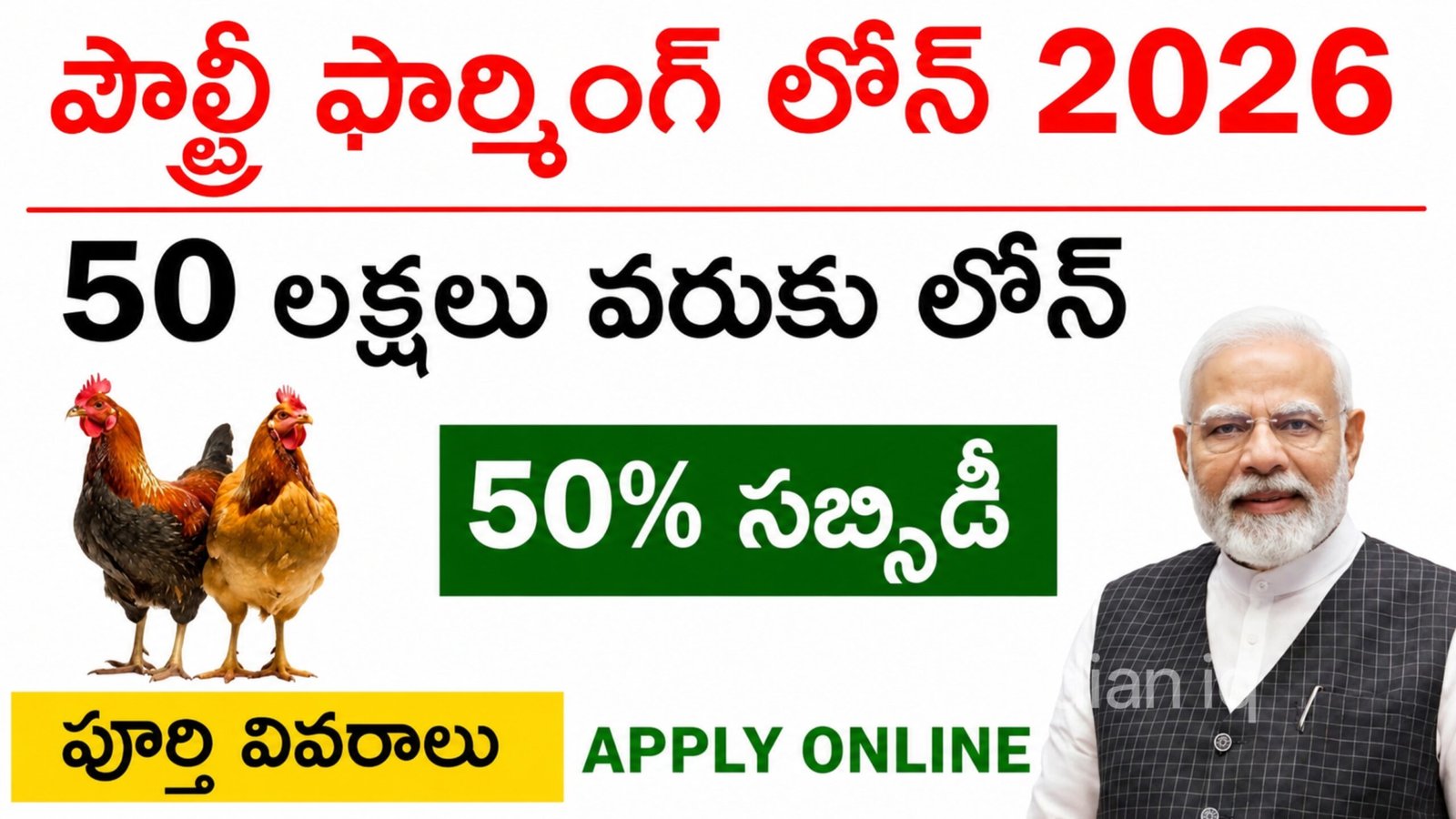
Poultry farming is one of the most profitable and rapidly growing agricultural businesses in India. It includes raising chickens for eggs (layers) and meat (broilers). To encourage farmers, rural youth, and entrepreneurs, the Government of India provides subsidies, loans, and training programs to reduce the cost of starting a poultry farm.
Why Does the Government Provide Poultry Subsidies?
The government promotes poultry farming because it:
- Creates employment opportunities in rural areas.
- Increases egg and meat production.
- Improves farmers’ income.
- Encourages self-employment among youth and women.
- Supports food security and nutrition.
Major Poultry Subsidy Schemes
| Scheme Name | Purpose | Subsidy Benefit |
|---|---|---|
| National Livestock Mission (NLM) | Poultry farm establishment and expansion | Up to 25-50% depending on category |
| State Poultry Development Schemes | State-specific poultry support | Varies by state |
| Bank-Linked Subsidy Programs | Loan assistance for poultry farms | Interest and capital subsidy |
| PMFME Scheme | Poultry processing and value addition | Up to 35% subsidy |
Types of Poultry Farms Eligible
1. Broiler Farming
- Chickens raised for meat production.
- Fast-growing business with quick returns.
2. Layer Farming
- Chickens raised for egg production.
- Provides regular daily income.
3. Backyard Poultry
- Small-scale poultry farming in villages.
- Requires low investment.
4. Hatchery and Breeding Units
- Production of chicks for commercial farms.
- Eligible for higher investment subsidies.
Eligibility Criteria
To apply for a poultry subsidy, a person must:
| Requirement | Details |
|---|---|
| Citizenship | Must be an Indian citizen |
| Age | Usually 18 years and above |
| Land | Own or leased land for poultry farming |
| Project Report | Detailed poultry business plan |
| Bank Account | Active bank account |
| Documents | Aadhaar, PAN, address proof, photos |
Subsidy Percentage
| Category | Subsidy Rate |
|---|---|
| General Category | 20% – 25% |
| Women Entrepreneurs | 30% – 35% |
| SC/ST Applicants | 30% – 35% |
| Special Areas (Tribal/Northeast) | May exceed 35% |
Actual subsidy may vary depending on the scheme and state government policies.
Loan Facility for Poultry Farms
Most poultry subsidies are linked to bank loans.
Loan Features
| Feature | Details |
|---|---|
| Loan Coverage | 75% – 90% of project cost |
| Farmer Contribution | 10% – 25% |
| Repayment Period | 5 – 7 years |
| Interest Rate | As per bank rules |
Banks often finance:
- Poultry sheds
- Chicks purchase
- Feed and medicines
- Equipment and machinery
- Water and electricity facilities
Documents Required
Prepare the following documents before applying:
- Aadhaar Card
- PAN Card
- Passport-size photographs
- Address proof
- Land ownership or lease documents
- Bank account details
- Poultry farm project report
- Income certificate (if required)
Application Process
Step 1: Prepare a Project Report
Include:
- Farm size
- Number of birds
- Investment cost
- Expected profit
Step 2: Visit a Bank
Apply for a poultry farming loan under the relevant government scheme.
Step 3: Submit Documents
Provide all required documents and project details.
Step 4: Verification
Bank and government officials inspect the proposal.
Step 5: Loan Approval
Loan is sanctioned after successful verification.
Step 6: Establish the Farm
Construct sheds and start operations.
Step 7: Subsidy Release
The subsidy amount is released after project implementation and verification.
Advantages of Poultry Farming
- Low land requirement
- High demand for eggs and chicken meat
- Quick return on investment
- Regular cash flow
- Government financial support
- Employment generation
- Suitable for women and young entrepreneurs
Important Links
Poultry farming is an excellent business opportunity in India, especially with the support of government subsidies and bank loans. Eligible farmers and entrepreneurs can receive financial assistance for setting up broiler farms, layer farms, hatcheries, and backyard poultry units. With proper planning, quality management, and utilization of available government schemes, poultry farming can become a highly profitable and sustainable source of income.