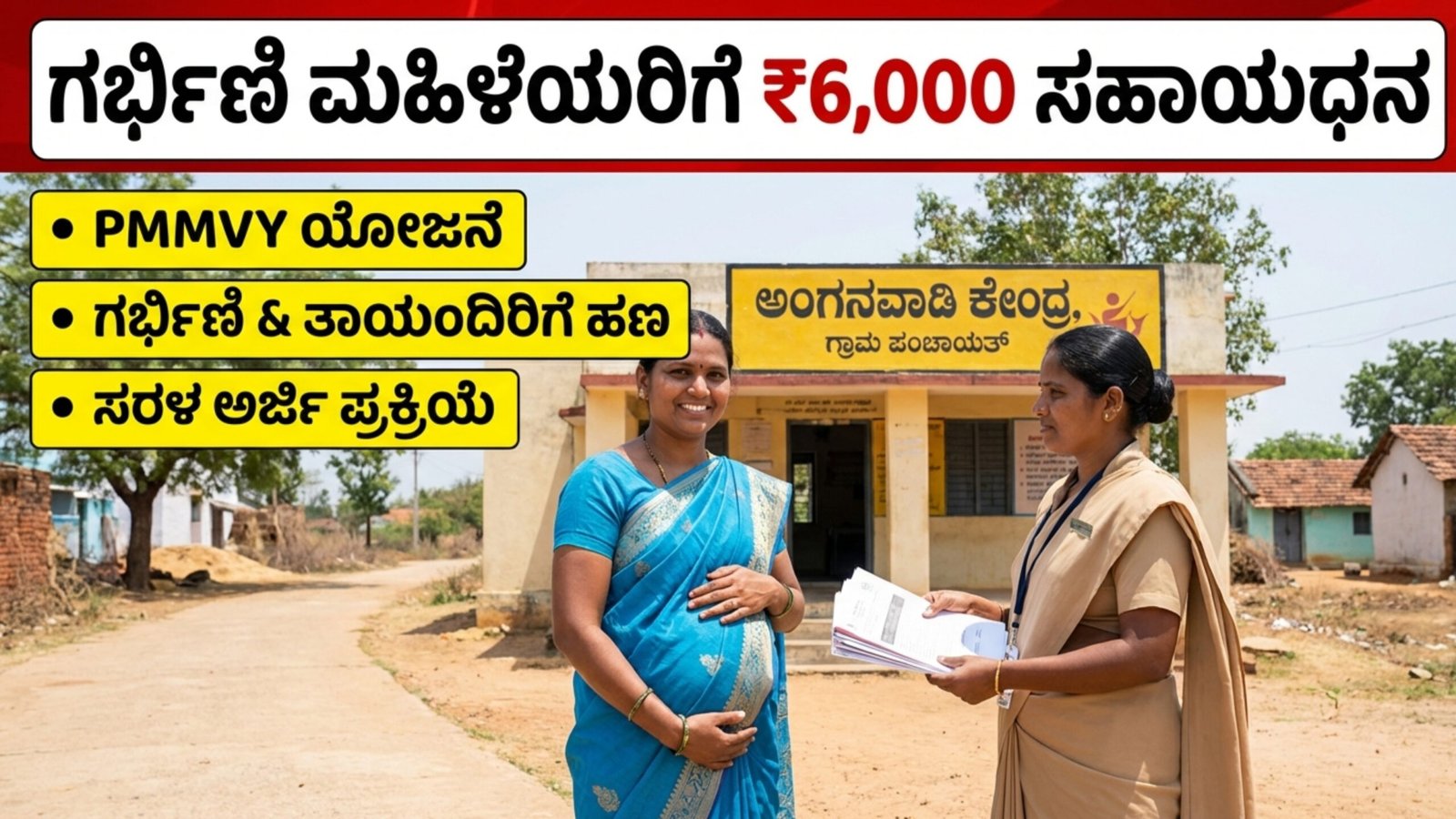
The Government of India has introduced several welfare schemes to support women and children, especially during pregnancy and early motherhood. One such important initiative is the Pradhan Mantri Matru Vandana Yojana (PMMVY). This scheme aims to provide financial assistance of ₹6,000 to pregnant women and lactating mothers to ensure proper nutrition, healthcare, and financial security during pregnancy and after childbirth.
The scheme plays a vital role in improving maternal health, reducing malnutrition, and encouraging institutional deliveries across the country. Millions of women from economically weaker sections benefit from this program every year.
In this article, we will explain the PMMVY scheme in detail, including its benefits, eligibility criteria, application process, required documents, and key objectives.
What is PMMVY Scheme?
Pradhan Mantri Matru Vandana Yojana (PMMVY) is a central government maternity benefit scheme launched by the Ministry of Women and Child Development (MWCD). The scheme provides financial assistance to pregnant women and lactating mothers for their first living child.
Under this program, eligible women receive a total benefit of ₹6,000, which is provided in installments to support them during pregnancy and after childbirth.
The main goal of this scheme is to improve maternal and child health by providing financial support during the crucial period of pregnancy and early motherhood.
Objectives of PMMVY Scheme
The PMMVY scheme was introduced with several important objectives:
1. Financial Support During Pregnancy
Pregnancy often requires women to reduce their workload or take rest. The scheme provides financial compensation for wage loss during pregnancy.
2. Improve Nutrition for Mothers
The financial assistance helps women purchase nutritious food and supplements, which are essential for the healthy growth of the baby.
3. Encourage Institutional Deliveries
The scheme promotes delivery in hospitals or health centers, reducing the risk of maternal and infant mortality.
4. Promote Health Checkups
Women are encouraged to attend regular antenatal checkups, vaccinations, and health monitoring.
5. Reduce Malnutrition
Proper nutrition during pregnancy helps reduce low birth weight and malnutrition among infants.
Financial Benefits Under PMMVY
Eligible beneficiaries receive ₹6,000 financial assistance under the scheme.
This amount is generally provided in three installments based on specific conditions.
Installment Structure
1st Installment – ₹1,000
- Provided after early registration of pregnancy at an Anganwadi center or health facility.
2nd Installment – ₹2,000
- Given after completing at least one antenatal checkup during pregnancy.
3rd Installment – ₹2,000
- Provided after childbirth registration and first vaccination cycle of the baby.
In addition to this, mothers may receive ₹1,000 under Janani Suraksha Yojana (JSY) depending on their eligibility, making the total assistance around ₹6,000.
Who Can Apply for PMMVY?
The PMMVY scheme is mainly designed for pregnant women and lactating mothers belonging to economically weaker sections.
Eligibility Criteria
Women must meet the following conditions:
• The applicant must be a pregnant woman or lactating mother
• The benefit is mainly for the first living child
• The woman must be 19 years or older
• The pregnancy must be registered at an Anganwadi center or government health facility
• The applicant must have a bank or post office account
• Aadhaar card is usually required for identification
Who is Not Eligible?
Some categories of women are not eligible under PMMVY:
• Women who are government employees
• Women receiving similar maternity benefits from other government schemes
• Women working in public sector undertakings
The scheme mainly focuses on unorganized sector workers and economically weaker families.
Documents Required for PMMVY
To apply for the PMMVY scheme, applicants need to submit the following documents:
• Aadhaar Card
• Bank Account Details / Passbook
• Mother and Child Protection (MCP) Card
• Pregnancy Registration Certificate
• Mobile Number
• Identity Proof
• Child Birth Certificate (for final installment)
These documents help verify the eligibility of the applicant.
How to Apply for PMMVY?
Women can apply for the PMMVY scheme through offline or online methods.
Offline Application Process
The easiest way to apply is through the Anganwadi Center.
Steps:
- Visit the nearest Anganwadi center or health center
- Request the PMMVY application form
- Fill in the required details such as name, address, pregnancy details, and bank information
- Attach the required documents
- Submit the form to the Anganwadi worker or health officer
Once the application is verified, the benefits will be transferred directly to the beneficiary’s bank account.
Online Application Process
Applicants can also apply through the official PMMVY portal.
Steps:
- Visit the official website
https://pmmvy.wcd.gov.in - Register with your mobile number
- Fill in the application form with required details
- Upload the necessary documents
- Submit the application
After verification, the payment will be credited to the beneficiary’s bank account through Direct Benefit Transfer (DBT).
Role of Anganwadi Centers
Anganwadi centers play a very important role in implementing the PMMVY scheme.
They help with:
• Pregnancy registration
• Application form submission
• Health monitoring of mothers
• Child vaccination tracking
• Nutrition awareness programs
Anganwadi workers also guide women about proper diet, breastfeeding, and child care.
Importance of PMMVY Scheme
The PMMVY scheme is considered one of the most important maternal welfare schemes in India.
Key Benefits
1. Reduces financial burden on poor families
Pregnancy often leads to additional medical and nutrition expenses. The scheme helps reduce this financial pressure.
2. Improves maternal health
Regular health checkups and proper nutrition help ensure a safe pregnancy.
3. Supports newborn health
Financial assistance encourages mothers to take proper care of newborn babies.
4. Promotes early registration of pregnancy
Early registration helps health workers monitor the health of both mother and baby.
5. Encourages institutional delivery
Women are more likely to give birth in hospitals, reducing risks during childbirth.
Impact of PMMVY in India
Since its launch, the PMMVY scheme has benefited millions of pregnant women across India.
Key achievements include:
• Improved maternal health awareness
• Increased hospital deliveries
• Reduced infant mortality rate
• Better nutrition among mothers and babies
The scheme is particularly helpful for women working in the unorganized sector, such as farm laborers, domestic workers, and daily wage earners.
Challenges in Implementation
Despite its benefits, the scheme faces some challenges:
• Lack of awareness in rural areas
• Delay in payment processing in some cases
• Documentation difficulties for some women
• Limited access to internet in remote regions
The government is working to simplify the application process and increase awareness through Anganwadi centers and health campaigns.
Government Efforts to Improve PMMVY
To make the scheme more effective, the government is taking several steps:
• Digitization of the application process
• Awareness campaigns in rural areas
• Integration with other maternal health programs
• Faster DBT payment systems
These improvements aim to ensure that every eligible woman receives the benefits without delay.
Apply Online
The Pradhan Mantri Matru Vandana Yojana (PMMVY) is a crucial welfare program designed to support pregnant women and new mothers across India. By providing ₹6,000 financial assistance, the scheme helps women manage nutrition, healthcare expenses, and financial challenges during pregnancy.
It also plays an important role in improving maternal health, reducing infant mortality, and encouraging safe childbirth practices.
Women who are eligible should take advantage of this scheme by registering at their nearest Anganwadi center or through the official PMMVY portal.
With proper awareness and implementation, PMMVY can significantly improve the health and well-being of mothers and children across the country.