Introduction: Empowering Households Through Free Electricity
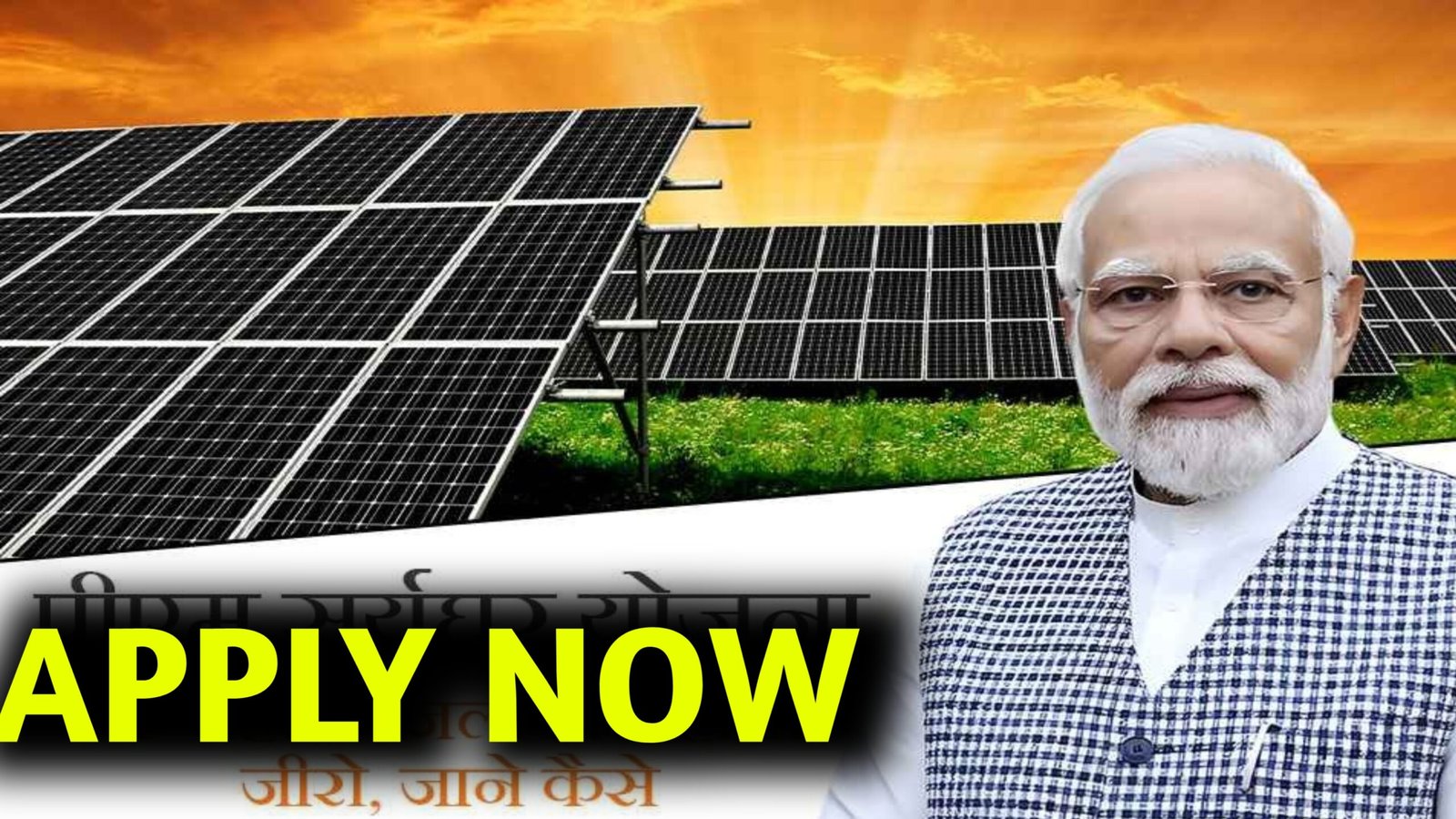
In recent years, the Government of India and several state governments have been implementing welfare schemes aimed at making basic utilities—like housing, water, and electricity—affordable for every citizen. Among these, one of the most impactful initiatives is the Free Electricity Scheme for Homeowners, which provides free solar power connections along with financial benefits of up to ₹78,000 for those who own their own houses.
This initiative not only reduces the burden of monthly electricity bills but also promotes renewable energy and sustainable living. Under this scheme, households that own a pucca (permanent) home can install solar panels on their rooftops, get free electricity for their daily use, and even earn money by selling surplus power back to the grid.
Let’s understand the full details of this remarkable government scheme—its objectives, eligibility, benefits, application process, and how it transforms the lives of homeowners across India.
The Vision Behind the Scheme
The Free Electricity Scheme is part of India’s broader vision to achieve “Energy for All” and transition towards a clean, green, and self-reliant energy economy. The program is aligned with the Pradhan Mantri Surya Ghar Muft Bijli Yojana, launched by Prime Minister Narendra Modi in 2024.
The government’s primary goal is to enable one crore families to install rooftop solar systems and receive free electricity up to 300 units per month. Additionally, the beneficiaries are eligible for subsidies up to ₹78,000 depending on the capacity of the solar panels installed.
This not only reduces household expenses but also contributes to India’s renewable energy mission, reducing dependency on fossil fuels and cutting down carbon emissions.
Key Objectives of the Scheme
The Free Electricity Scheme has multiple socio-economic and environmental goals:
- To provide free or low-cost electricity to homeowners and reduce their power bills.
- To promote the use of renewable energy sources, especially solar power.
- To empower rural and middle-class families with self-sufficient energy solutions.
- To support the national goal of generating 500 GW of renewable energy by 2030.
- To create employment opportunities in the solar installation and maintenance sectors.
- To encourage citizens to contribute to a clean and green India.
Scheme Highlights
Here are the most important highlights of the Free Electricity Scheme for Homeowners:
| Feature | Description |
|---|---|
| Scheme Name | Pradhan Mantri Surya Ghar Muft Bijli Yojana |
| Launch Year | 2024 |
| Announced By | Prime Minister Narendra Modi |
| Financial Benefit | Up to ₹78,000 subsidy |
| Electricity Benefit | 300 units of free electricity every month |
| Target | 1 crore households across India |
| Type of Benefit | Financial subsidy + Free electricity generation |
| Beneficiaries | Homeowners with independent houses |
| Energy Source | Rooftop Solar Power System |
| Official Website | https://pmsuryaghar.gov.in |
How the Scheme Works
The Free Electricity for Homeowners scheme works under a subsidy-based solar installation model. Here’s how the process operates step by step:
- Installation of Rooftop Solar Panels:
Homeowners install government-approved rooftop solar panels on their houses. - Financial Assistance:
The government provides a direct subsidy of up to ₹78,000 for installing the system. - Free Power Generation:
The electricity generated from solar panels is used to power the home. On average, a 3 kW system can generate up to 300 units of power per month, which is sufficient for most households. - Net Metering and Power Sale:
If the system produces more electricity than the household consumes, the surplus power is exported back to the electricity grid, and the homeowner earns credit or payment for it. - Zero Power Bill:
Beneficiaries can enjoy zero or minimal electricity bills every month, depending on their usage. - Maintenance Support:
Government-approved vendors provide installation, warranty, and service support for the solar systems.
Subsidy Structure and Financial Support
The scheme provides central government subsidies that cover a major portion of installation costs. The remaining amount can be paid by the homeowner or financed through low-interest loans.
| Solar System Capacity | Approx. Cost (₹) | Government Subsidy (₹) | User Contribution (₹) |
|---|---|---|---|
| 1 kW | ₹70,000 | ₹30,000 | ₹40,000 |
| 2 kW | ₹1,40,000 | ₹60,000 | ₹80,000 |
| 3 kW | ₹2,10,000 | ₹78,000 | ₹1,32,000 |
| Above 3 kW | Subsidy capped at ₹78,000 | — | — |
This means that homeowners installing a 3 kW solar system will receive the maximum subsidy of ₹78,000, significantly reducing the cost burden.
Benefits of the Free Electricity Scheme
The scheme is designed to deliver multiple layers of benefits—financial, environmental, and social.
a. Free Monthly Electricity
Homeowners get up to 300 units of free electricity every month, reducing their power expenses to almost zero.
b. One-Time Financial Support
With a subsidy of up to ₹78,000, the cost of installing a solar system becomes affordable for middle-class and rural families.
c. Lifetime Savings
Solar panels typically last 25 years, meaning beneficiaries can save lakhs of rupees over time on electricity bills.
d. Environment-Friendly Energy
Solar energy is clean and renewable, helping reduce air pollution and carbon emissions.
e. Extra Income
Surplus energy produced can be sold to the grid, generating extra income for the homeowner.
f. Women and Rural Empowerment
The scheme prioritizes women-headed households and rural families, giving them economic independence.
g. Boost to Local Economy
Increased demand for solar panels, electricians, and installation services boosts local job creation and the renewable energy sector.
Eligibility Criteria
To ensure that the benefits reach the intended families, the government has set specific eligibility conditions.
- The applicant must be a citizen of India.
- The applicant must own a permanent (pucca) house with a suitable rooftop.
- The applicant’s household must have a valid electricity connection.
- Only one subsidy will be provided per family.
- The applicant should not have availed of any other solar subsidy scheme.
- Preference is given to households with annual income below ₹3 lakh in rural areas, though urban homeowners are also eligible.
How to Apply for the Scheme
The application process for the Free Electricity Scheme is entirely online and transparent.
Step-by-Step Application Process
- Visit the Official Website:
Go to https://pmsuryaghar.gov.in. - Register as a New User:
Click on Apply for Rooftop Solar and register using your mobile number, Aadhaar, and electricity consumer number. - Select Vendor:
Choose an approved vendor listed on the portal to install your solar panels. - Site Inspection:
The vendor or local DISCOM officer will visit your home to check if the rooftop is suitable for installation. - Installation & Verification:
Once approved, the solar system will be installed and inspected by authorities. - Subsidy Disbursement:
After verification, the government directly credits the subsidy amount (up to ₹78,000) to your bank account through Direct Benefit Transfer (DBT).
Required Documents
Applicants need to provide the following documents while applying:
- Aadhaar Card (mandatory)
- Electricity Bill
- Property Ownership Proof (House Tax Receipt or Sale Deed)
- Bank Account Details
- Passport-size Photograph
- PAN Card or Income Certificate (if required)
Implementation and Monitoring
The scheme is implemented jointly by the Ministry of New and Renewable Energy (MNRE) and state electricity boards.
- Every state has DISCOMs (Distribution Companies) responsible for verifying installations.
- Online tracking systems and geo-tagging ensure transparency.
- Regular audits maintain installation quality and prevent misuse.
Economic and Environmental Impact
Economic Impact:
- Reduces electricity expenses for over 1 crore families.
- Generates massive employment in the renewable energy sector.
- Encourages domestic manufacturing of solar panels and inverters under the “Make in India” initiative.
Environmental Impact:
- Each 1 kW solar system saves approximately 1.5 tons of CO₂ emissions annually.
- Contributes significantly to India’s climate action goals under the Paris Agreement.
- Reduces dependency on coal-based thermal power plants.
Challenges and Government Solutions
While the scheme is highly beneficial, it faces a few practical challenges:
- High upfront costs for some households.
- Lack of awareness in rural areas.
- Roof space limitations in congested urban areas.
To address these, the government has:
- Partnered with nationalized banks to offer low-interest loans.
- Launched awareness drives through Gram Panchayats and urban municipal bodies.
- Encouraged group housing societies to install shared solar systems.
Success Stories
Many families across India are already enjoying the benefits of free electricity.
- In Gujarat, thousands of homeowners have installed rooftop solar panels and now pay zero electricity bills.
- In Rajasthan and Karnataka, rural households report annual savings of ₹15,000 to ₹20,000.
- Urban housing societies in Delhi, Pune, and Hyderabad are exporting surplus power and earning credits from DISCOMs.
Future Plans and Expansion
The government plans to expand this initiative further by:
- Increasing the subsidy limit for larger systems.
- Bringing rental houses and group housing societies under the scheme.
- Introducing smart meters for accurate net metering.
- Linking the scheme with digital energy monitoring platforms for efficiency tracking.
A Step Towards Energy Independence
The Free Electricity Scheme for Homeowners, under the Pradhan Mantri Surya Ghar Muft Bijli Yojana, is a revolutionary initiative that blends financial relief, environmental protection, and social empowerment. By providing up to ₹78,000 in subsidies and 300 units of free electricity every month, the scheme has the power to transform millions of lives—especially in rural and middle-class India.
It is not just a welfare program—it is a movement toward sustainable living. With every rooftop solar panel installed, India takes one step closer to becoming a self-reliant, energy-secure nation.
In short, this scheme brings light to homes and hope to hearts—ensuring that every Indian household can shine with its own power.