Introduction: Transforming the Dream of ‘Housing for All’ into Reality
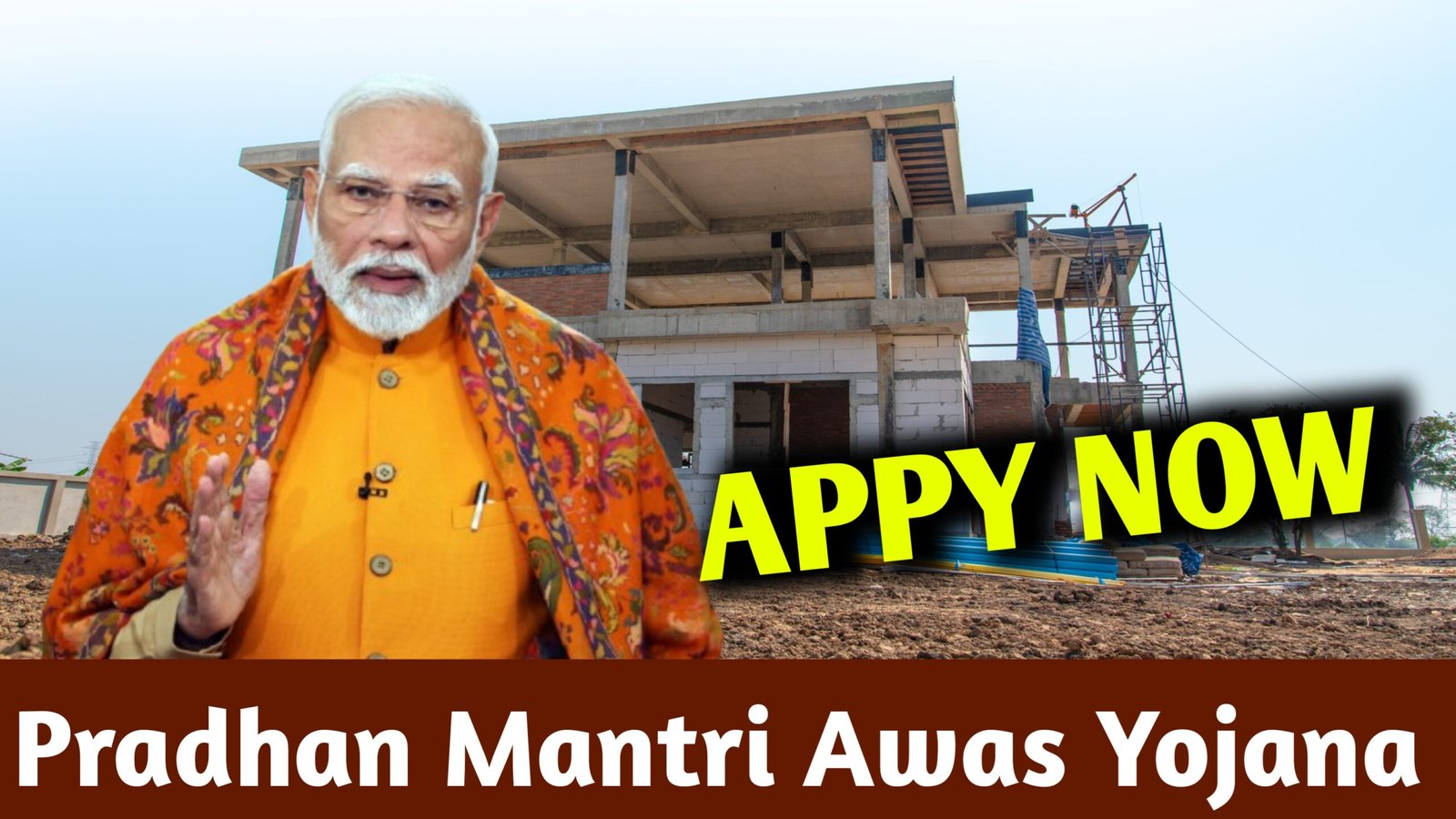
The Pradhan Mantri Awas Yojana (PMAY) is one of the most ambitious flagship programs launched by the Government of India to ensure that every citizen of the country has access to a pucca house (permanent housing). Introduced by Prime Minister Narendra Modi in June 2015, the scheme aims to provide “Housing for All by 2024” by offering financial assistance, subsidies, and affordable housing opportunities to the economically weaker and middle-income sections of society.
The PMAY has two main components:
- PMAY-U (Urban) – For people living in cities and towns.
- PMAY-G (Gramin) – For people living in rural areas.
Both schemes focus on improving the standard of living by providing safe, durable, and affordable houses with essential amenities like toilets, electricity, and water supply.
Objectives of Pradhan Mantri Awas Yojana
The central goal of PMAY is to ensure that every Indian family owns a house. Beyond just construction, the scheme focuses on improving quality of life through the following objectives:
- Providing affordable housing to Economically Weaker Sections (EWS), Low-Income Groups (LIG), and Middle-Income Groups (MIG).
- Promoting inclusive urban development through planned housing projects.
- Empowering women by ensuring ownership or co-ownership in the woman’s name.
- Encouraging eco-friendly construction using sustainable technologies.
- Ensuring access to basic amenities such as electricity, sanitation, drinking water, and clean cooking fuel.
- Reducing urban slum population by rehabilitating slum dwellers.
Components of PMAY (Urban)
PMAY-Urban operates under four main verticals, each targeting specific groups and housing needs:
- In-situ Slum Redevelopment (ISSR):
- Focus: Transforming slum areas into formal housing communities.
- Approach: Uses land as a resource to rehabilitate slum dwellers by building new pucca houses on the same land.
- Benefit: Slum residents get permanent homes at the same location with better living conditions.
- Credit Linked Subsidy Scheme (CLSS):
- Focus: Helping EWS, LIG, and MIG families buy or build homes through housing loans.
- Benefit: Interest subsidy ranging from 3% to 6.5% on home loans for 20 years or more, depending on the category.
- Eligibility: Families with annual income up to ₹18 lakh.
- Affordable Housing in Partnership (AHP):
- Focus: Public-private partnerships between government and developers.
- Benefit: Central assistance of ₹1.5 lakh per house for EWS families.
- Target: Encourage private builders to construct affordable housing projects.
- Beneficiary-Led Construction (BLC):
- Focus: Assistance for families who already own land but need funds to construct or enhance their house.
- Benefit: ₹1.5 lakh central assistance for eligible families.
Components of PMAY (Gramin)
The PMAY-Gramin (PMAY-G) is designed specifically for rural India, replacing the earlier Indira Awaas Yojana (IAY). It focuses on providing pucca houses with basic amenities to rural households living in kutcha houses or without homes.
Key Features of PMAY-G:
- Financial Assistance: ₹1.20 lakh for plain areas and ₹1.30 lakh for hilly or difficult areas.
- Minimum House Size: 25 square meters (including kitchen).
- Funding Ratio:
- 60:40 between Centre and State for plain areas.
- 90:10 for North Eastern and Himalayan states.
- Payments: Funds are transferred directly to beneficiaries’ bank accounts via Direct Benefit Transfer (DBT).
- Integration with Other Schemes: PMAY-G houses are linked with schemes like Saubhagya (electricity), Ujjwala (LPG), and Jal Jeevan Mission (water supply).
Eligibility Criteria for PMAY
PMAY focuses on specific income groups and categories to ensure that benefits reach those who need them most.
1. Economically Weaker Section (EWS):
- Annual household income: Up to ₹3 lakh.
- Eligible for: All benefits under PMAY including subsidy.
2. Low-Income Group (LIG):
- Annual household income: Between ₹3 lakh and ₹6 lakh.
- Eligible for: Interest subsidy and housing assistance.
3. Middle-Income Group (MIG-I):
- Annual household income: ₹6 lakh – ₹12 lakh.
- Eligible for: Interest subsidy of 4% on loans up to ₹9 lakh.
4. Middle-Income Group (MIG-II):
- Annual household income: ₹12 lakh – ₹18 lakh.
- Eligible for: Interest subsidy of 3% on loans up to ₹12 lakh.
5. Other Eligibility Conditions:
- The beneficiary family must not own a pucca house in any part of India.
- The family should not have availed of any housing scheme from the government before.
- The property should be in the name of a female member or jointly owned.
Financial Benefits and Subsidy Details
One of the biggest attractions of PMAY is the Credit Linked Subsidy Scheme (CLSS), which provides an interest subsidy on housing loans.
| Category | Annual Income | Loan Limit for Subsidy | Interest Subsidy | Maximum Subsidy Amount |
|---|---|---|---|---|
| EWS | Up to ₹3 lakh | ₹6 lakh | 6.5% | ₹2.67 lakh |
| LIG | ₹3 – ₹6 lakh | ₹6 lakh | 6.5% | ₹2.67 lakh |
| MIG-I | ₹6 – ₹12 lakh | ₹9 lakh | 4% | ₹2.35 lakh |
| MIG-II | ₹12 – ₹18 lakh | ₹12 lakh | 3% | ₹2.30 lakh |
This subsidy significantly reduces the effective EMI burden, helping families purchase homes more easily.
How to Apply for PMAY
Applying for PMAY is simple and can be done online or offline.
Online Method:
- Visit the official website – https://pmaymis.gov.in.
- Click on “Citizen Assessment” and select the appropriate category (EWS, LIG, MIG, or Slum Dwellers).
- Enter your Aadhaar number and verify details.
- Fill in personal, income, and housing details.
- Submit the form and note the Application Reference Number (ARN) for tracking.
Offline Method:
- Visit the nearest Common Service Centre (CSC) or bank branch partnered with PMAY.
- Fill out the physical application form with valid ID proof, income certificate, and other KYC documents.
- Pay a small processing fee (around ₹25–₹50).
Documents Required for PMAY Application
Applicants need to provide the following documents:
- Aadhaar Card (mandatory)
- Income Proof or Salary Slip
- Bank Account Statement
- Property Ownership Documents
- Identity Proof (PAN, Voter ID, Passport)
- Address Proof (Utility Bill, Ration Card)
- Construction or Renovation Plan (if applicable)
Advantages of PMAY
- Affordable Housing for All:
The scheme bridges the housing gap by enabling every family to own a pucca house. - Interest Subsidy:
Subsidies reduce overall housing costs and EMI payments, making home loans more accessible. - Women Empowerment:
Property ownership in the woman’s name promotes gender equality and financial independence. - Infrastructure Development:
Creates planned urban and rural housing layouts with access to roads, sanitation, and water supply. - Employment Generation:
The construction activities under PMAY generate jobs in both urban and rural areas. - Boost to Real Estate Sector:
Encourages affordable housing projects and revitalizes the construction industry.
Progress and Achievements
Since its inception, the PMAY scheme has achieved remarkable milestones:
- Over 4 crore houses sanctioned under PMAY (Urban + Gramin).
- More than 3 crore houses completed and handed over to beneficiaries.
- Over ₹2.2 lakh crore central assistance released.
- PMAY has significantly reduced the number of families living in slums.
- Improved access to sanitation and clean energy through integration with other government schemes.
Technological Innovation and Transparency
PMAY uses digital platforms and advanced technologies to ensure transparency and accountability.
- Geo-tagging: Each house is geo-tagged to track construction progress in real time.
- Aadhaar-based verification: Prevents duplication of beneficiaries.
- Direct Benefit Transfer (DBT): Ensures funds are directly credited to the rightful recipient.
- Online Application Portal: Simplifies the process for applicants nationwide.
Challenges and Criticism
While PMAY has been a successful initiative, it faces several challenges:
- Land availability: In urban areas, finding affordable land remains difficult.
- Delays in project execution: Bureaucratic hurdles and contractor delays can slow progress.
- Quality issues: Some houses have been reported to have substandard construction quality.
- Awareness gap: Many rural and low-income families are still unaware of how to apply.
- Rising construction costs: Inflation has affected affordability in some regions.
The government, however, continues to address these issues through stricter monitoring, partnerships with private builders, and improved awareness campaigns.
Future Vision of PMAY
The Government of India plans to extend and strengthen PMAY by:
- Expanding coverage to all eligible beneficiaries by 2025.
- Encouraging green building technologies and solar power integration.
- Increasing urban infrastructure to support the new housing colonies.
- Promoting digital governance for faster approvals and fund disbursements.
The long-term vision is not just to provide housing but to create sustainable, smart, and inclusive communities where every Indian can live with dignity.
Apply Now
The Pradhan Mantri Awas Yojana (PMAY) stands as a symbol of India’s commitment to equitable development and inclusive growth. By ensuring that even the poorest citizens can own a home, the scheme transforms lives—offering stability, security, and self-respect.
Through transparent policies, affordable financing, and a focus on women’s empowerment, PMAY has brought the dream of “Housing for All” closer to reality. While challenges remain, the consistent progress and government dedication make PMAY one of the most impactful social welfare schemes in modern India.
Ultimately, PMAY is more than a housing project—it’s a nation-building initiative that gives every citizen the foundation for a better, safer, and more prosperous life.